
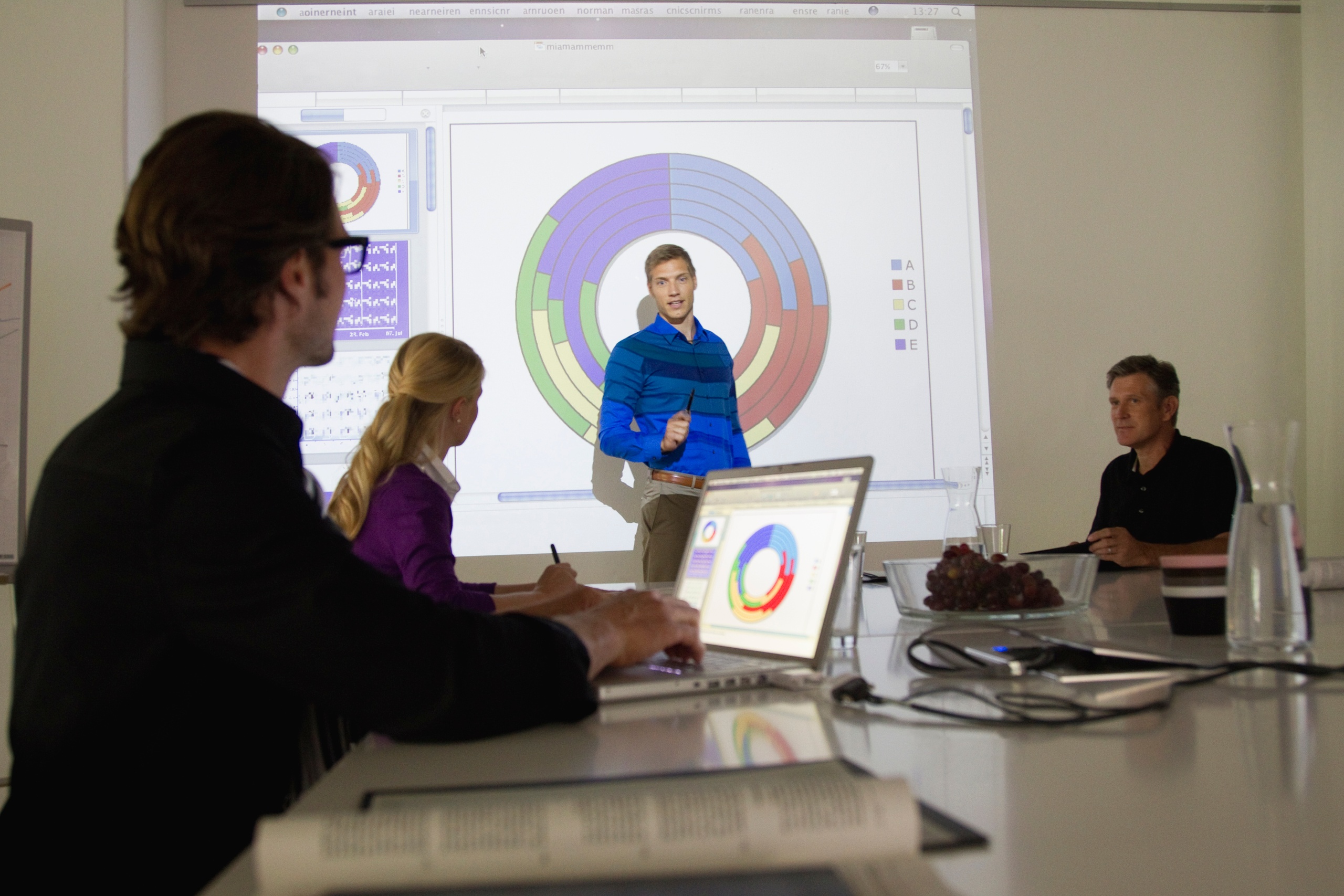
Your audience doesn’t take away what a beautiful slide you used, but the message conveyed by each design element, each slide animation and every word you uttered. People believe presentation skills is something you are born with, but it is a set of skills which you can acquire. When your thoughts are structured, your message is conveyed through even the most intricate subject. Nobody remembers a presentation which was bombarded with loud sounds and screaming graphics, but the one that led us from confusion to insight.
Of all the components of an effective presentation, narrative is one of the most underrated. You might have correct data, statistics and visuals, but if there is no narrative thread, they are random and hard to keep track of. A good narrative helps the audience know what is coming next and why you are presenting this, and it turns the act of listening into a deductive process where the audience fills in the blanks, making it more stable and memorable. Even if it takes a while, the audience will feel the presentation is shorter.
But visual design can and should be used to reinforce those concepts. Slides should complement a presentation, not fight for attention. They should aid comprehension. Simple fonts, limited color, white space — these are all tools to ease the audience’s cognitive load, freeing them to absorb what you’re saying instead of working to decipher a slide. Information density makes it difficult to prioritize. Sometimes the simplest-looking presentations are just a result of asking, for every design choice, “Does this make it easier for the audience to understand?”
This is as crucial as the speaker’s inner preparation. You cannot be confident without knowing the subject matter and having a clear idea of what you want to achieve. Practicing your speech doesn’t mean memorizing sentences; rather, you want to master the structure, so the presentation comes across as conversational and improvised. When you master the connections between ideas, you can answer a question that you didn’t expect and continue in a logical manner. This gives you authority, as you seem to be thinking on your feet instead of reading a text.
Finally, the secret talent of great presentations is empathy: the capacity to see an argument from another person’s point of view. When you keep your viewer in mind, create useful graphics, and design with purpose, you’re not showing off your skills; you’re guiding your viewer to understand your point. And when you do this, the act of giving a presentation ceases to be an exhibition and becomes a vital conversation. In the workplace, in academia, in entrepreneurship, in everything, the people who know this are the ones who give a presentation and get exactly what they want: action, agreement, and remembering.